
HERstory Makers: Dr. Aruna Gnanadason
WRITTEN BY: Mikayla Nembhard
For a long time, I think I bought into the idea that if a voice was going to actually change the Church, it had to be coming from behind a pulpit. I thought impact required a title, a collar, or at least a formal invitation to the front of the room.
But then I encountered the story of Dr. Aruna Gnanadason, and she completely changed things for me.
She’s one of those rare voices who works from the margins not because she has to, but because that’s where the truth usually lives. She spends her time asking the hard questions, naming the things the rest of us try to ignore, and quietly calling the Church to look like the Christ it talks about so much.
Her STORY
Dr. Aruna Gnanadason is a lay theologian, ecumenist, and women’s activist from India whose work has quietly, yet powerfully, shaped global conversations around faith, justice, and the role of women in the Church.
The most empowering part for me? She’s a lay theologian, meaning she’s not ordained. She’s a living, breathing reminder that we don’t need permission to do the work God has called us to. We don’t need a spot in the hierarchy to change the world around us because impact doesn't just happen at the front of the room, it can also happen on the ground, with the people.
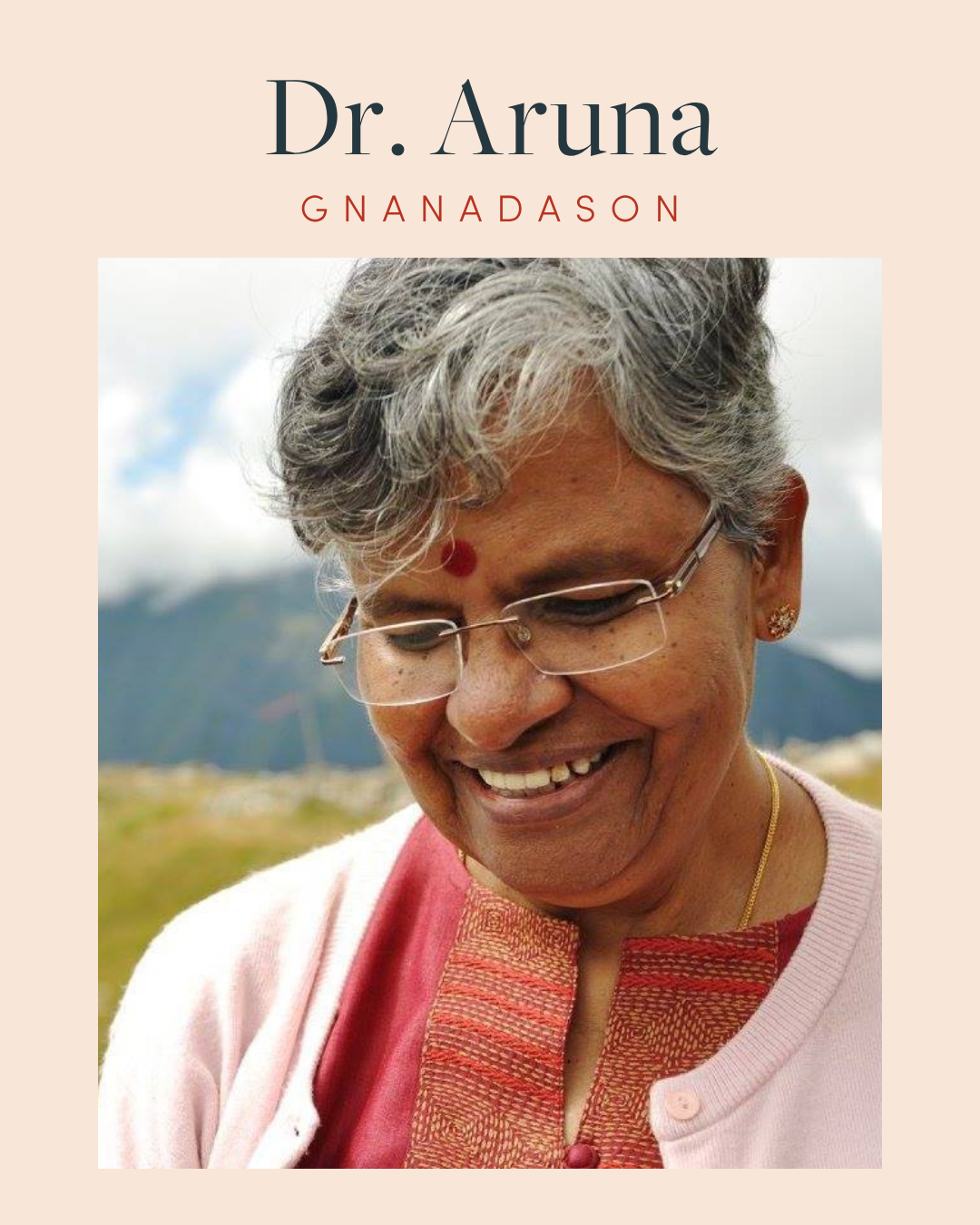
Dr. Gnanadason also holds a doctorate in feminist theologies and a Master’s in English literature, which is an intersection that shows up clearly in her work. She doesn’t just study theology, she speaks it in a way that names real systems, real pain, and real hope.
From 1991 to 2009, she served with the World Council of Churches in Geneva, where she directed the global program on Women in Church and Society. She led initiatives focused on Justice, Peace, and the Integrity of Creation. She is also deeply rooted in her local context, serving as the National Convener of the Indian Christian Women’s Movement.
These aren’t small titles – they represent spaces where decisions are made, where voices are heard (or silenced) and where the future of the global Church is shaped.
And Dr. Gnanadason showed up in those spaces with clarity and conviction.
Her work isn’t just theory but it’s grounded in lived experience, in community, and in the realities women face every day, highlighting the intersections of patriarchy, caste, and global capitalism.
She refuses to separate faith from the systems that shape people’s lives. Instead, she asks the Church to look honestly at how it has, at times, participated in injustice especially towards women. That kind of honesty isn’t always welcomed; it is necessary.
Her impact isn’t just because of where she has served, but on what she has chosen to confront.
When I think of Dr. Aruna Gnanadason, the word that comes to mind is courage. Not a loud, boisterous, performative courage but a steady and grounded one. The kind that tells the truth even when it would be easier to stay quiet and remain comfortable. She chooses to stand up and speak out.
In her writing and leadership, she calls for systemic change within both Church structures and society. She challenges theological spaces to become more inclusive, more just, and more reflective of the full image of God. The way that God intended it in the first place… with women included.
One of her reflections that I can’t stop thinking about is this image of women "pouring ointment on the feet of the Church." It’s such a stunning and captivating picture. It instantly takes me back to the Gospel story of the woman with the alabaster jar. A woman who offered everything she had even while the "important" people in the room questioned her very right to be there.
There’s something so intentional about that word choice. Ointment isn't just a nice gesture; it’s something that both heals and prepares. It soothes a wound, but it also readies someone for what’s coming next.
I think about the women in my own life who have done this "ointment work", the ones who stood by me when I and others counted me out or I thought my voice had no worth. Maybe you have someone like that, too?
That’s exactly what Dr. Gnanadason does. She doesn't just point out where the Church is hurting, she uses her voice to prepare us for a transformation we didn't even know we needed.
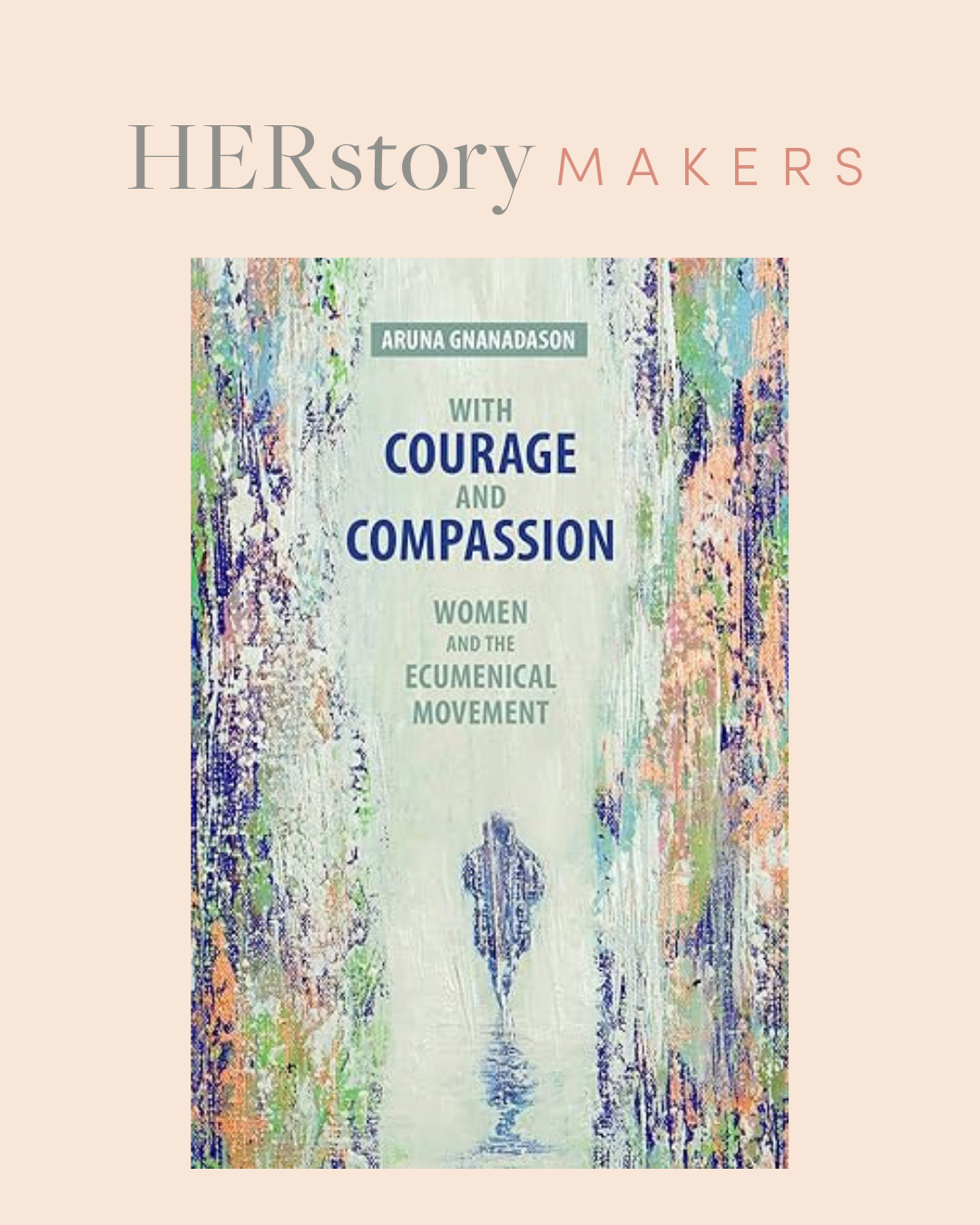
Dr. Gnanadason’s work names the wounds within the Church, particularly the ways in which women have been marginalized, silenced, or excluded. And yet, she also prepares the Church for transformation and preparation for new beginnings. In her book With Courage and Compassion: Women and the Ecumenical Movement, she highlights both the contributions of women and the ongoing challenges they face, including violence and systemic inequality.
But she doesn’t stop at naming the problem. She calls for a new kind of imagination.
A theological vision that is not content with maintaining the status quo, but one that actively seeks justice. A political imagination that recognizes faith is not separate from how people live, lead, and are treated in the world. A reality not defined by rejection, but by truth, compassion, and persistence.
It’s not easy work, but a hard job done with much grace. It requires confronting deeply embedded systems. It requires patience. And it requires a willingness to keep going, even when change feels slow.
Which is exactly what she has done.
Making HERstory
Dr. Aruna’s impact stretches far beyond one role, one country, or one generation. Through her leadership in global ecumenical spaces, her advocacy for women, and her commitment to justice, she has helped shape a more honest and inclusive theological conversation, one that makes room for voices that have too often been pushed aside.
And while her work may not always be the loudest, it is deeply foundational.
Because before institutions change, conversations have to change.
Before systems shift, perspectives have to shift.
Before justice is seen, it has to first be named.
That’s the kind of work Dr. Gnanadason has given her life to.
Her story reminds us that faith and justice are not separate conversations. Justice is what love looks like in action. This was the way Christ taught: theology is not just something we study, it's something we live.
Her story reminds us that the courage to challenge systems, even within the Church, is part of what it means to follow Christ.
As we honour her this Women’s History Month, we’re reminded that her story isn’t only made in moments of visibility. It’s made in the steady work of those who choose truth over comfort, justice over silence, and compassion over complacency.
Dr. Aruna Gnanadason didn’t just participate in the conversation. She helped change it.
About The Author:
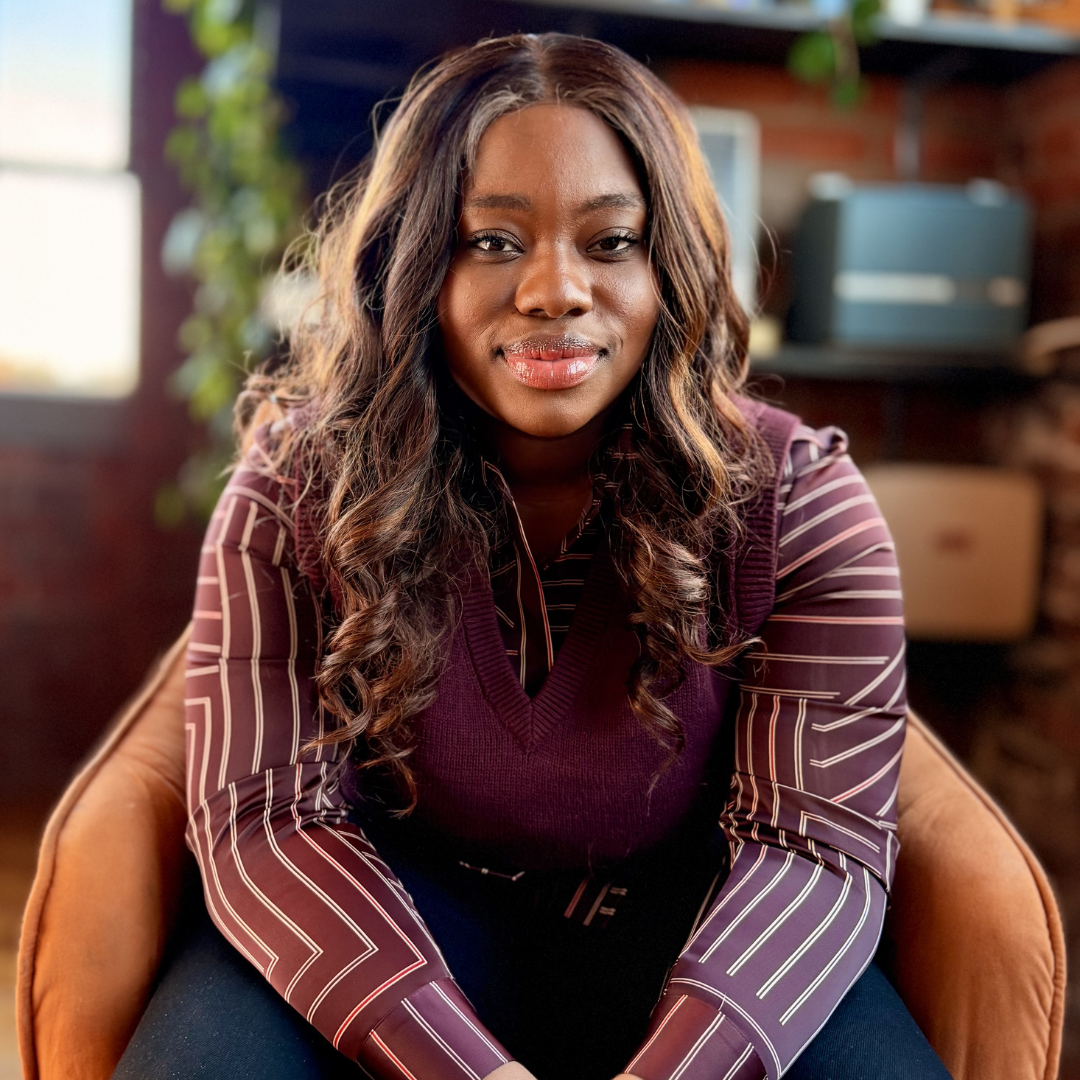
Mikayla Nembhard is a TV Producer, Speaker, Content Creator, and Podcast Host who uses storytelling to inspire change, empower young people, and champion justice through her work for On The Path, Chasing Justice, and The Brave Girls Podcast.